LEONARDO DA VINCI FLYING MACHINE
The flying machine was the centrepiece of a major exhibition on Leonardo da Vinci at the Hayward Gallery, London, and was developed over a period of 18 months preceding the exhibition’s inauguration in February 1989.




I was approached initially by the architect Paul Williams of the practice Stanton Williams, regular clients of mine for architectural models, who were at the time resident architects for the whole of the South Bank complex, which includes the Hayward Gallery. In designing the exhibition’s layout, they envisaged a spectacular installation in the largest hall, which would be the grand finale to the exhibition and they were undecided whether to choose a full-scale reconstruction, in 3D, of the Last Supper, which is interesting for its manipulation of perspective, or a full-scale reconstruction of Leonardo da Vinci’s flying machine. Their preference was for the latter and Paul Williams asked me directly if I knew of anybody who might be interested in becoming involved and, without hestitating, I replied “yes, you are talking to him.”
It was a unique and rich episode in my professional life. The exhibition was an Arts Council funded project, through which I met a number of unusual and memorable people. It was the brainchild of Martin Kemp, at the time Professor of Art History at the University of St. Andrews, who also curated the exhibition. Some of the material relating to Leonardo’s work on flight is contained in, amongst other collections, the Codex Atlanticus, which are part of the Queen’s collection, so it was with Martin Kemp that I went to the Royal Library at Windsor and handled, under supervision and wearing with white gloves, the very notebooks filled by Leonardo’s own hand. Together we selected images that were relevant to the project, which were copied and later forwarded to me by the library staff.
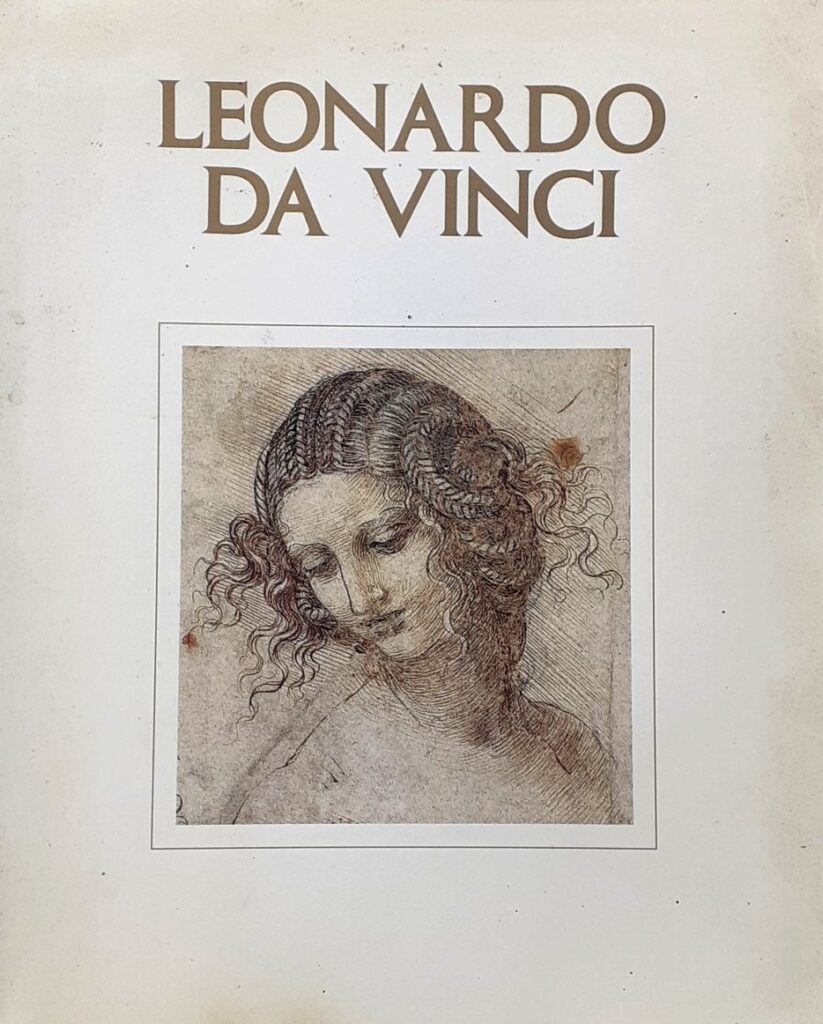
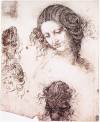
I was very struck by the notebooks – I had always imagined them to be vast tomes so heavy that it takes two people to lift them, whereas, in fact, they are all compact, meaning that they were intended to be easily portable. This completely altered my perception of how Leonardo must have worked – he must have executed some of his drawings while on the move rather than in his studio. The famous head of the Leda, for exampe, that was used for the giant exhibition poster is in reality scarcely bigger than a postcard.

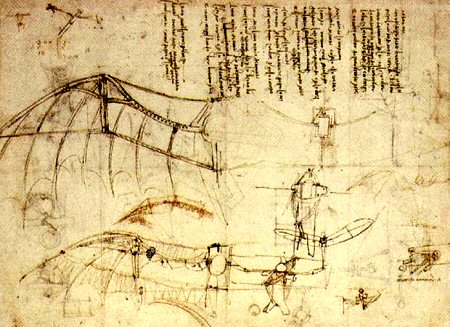


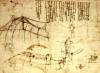
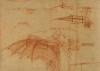
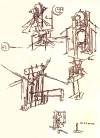
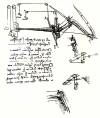
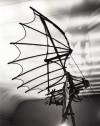
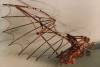
The design of the machine passed through various stages of prototype, presented each time to the Hayward Gallery team responsible for the forthcoming exhibition, headed by Julia Peyton-Jones, who would later go on to direct the Serpentine Gallery. The subject of human flight preoccupied Leonardo from the early 1480s until the end of his life in 1519 and there is no single drawing showing a definitive and complete machine, but rather innumerable sketches of different mechanical elements reflecting his thoughts on how to reproduce the movement of birds’ wings, the means of delivering power and so on and so forth. I began, therefore, by modelling different elements, mechanical and structural, that would need to be included in a comprehensive design until I was able to present the reduced scale prototype of what I proposed to build full-scale. The machine would be built in beech, as specified in the notebooks, and measure just over 11m in wingspan.
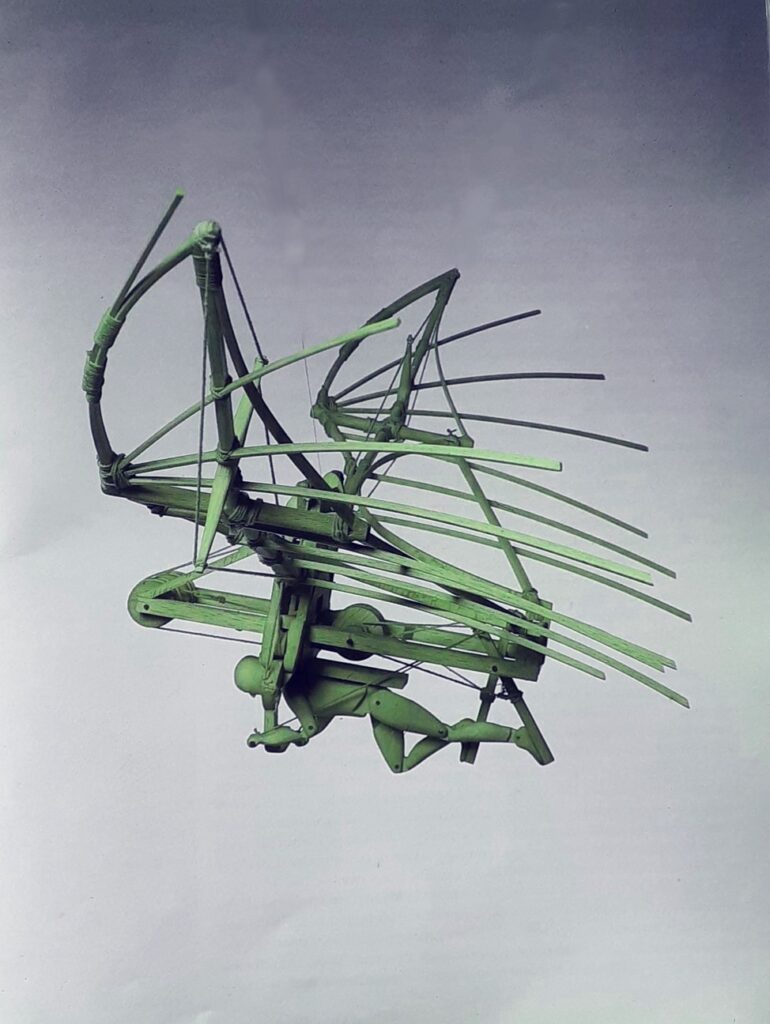
From the outset, I intended to ask a friend of mine, Reid Galbraith, to oversee the construction. Reid was a luthier with a worldwide renown for the manufacture not just of lutes but also harpsichords and guitars. We had already known each other for fifteen years – I had watched him at work on his instruments and had seen that his knowledge of precision woodworking reached way beyond my own: I knew I could have absolute confidence in him to reproduce the design using the woodworking techniques that would have been familiar to Leonardo himself. We built amongst other things a steamer for bending the curved members of the wings and used no metal fastenings in the entire structure – everything was pegged and all the ropework was in natural fibre.


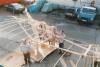
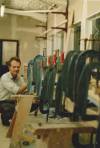
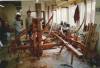
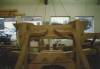
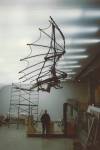
During the assembly of the machine at the Hayward, I also met Nick Morse, a talented artist known for his work with kites and tensioned fabric, who had been charged with the task of installing a stretched ripstop nylon ceiling to conceal the rather unlovely brutalist concrete coffered structure overhead. We had to find a way to pass the steel cable that would take the weight of the machine through his ceiling, that was as taut as a snare drum, without it tearing itself apart. It was no easy matter but we are still close friends nearly forty years on.


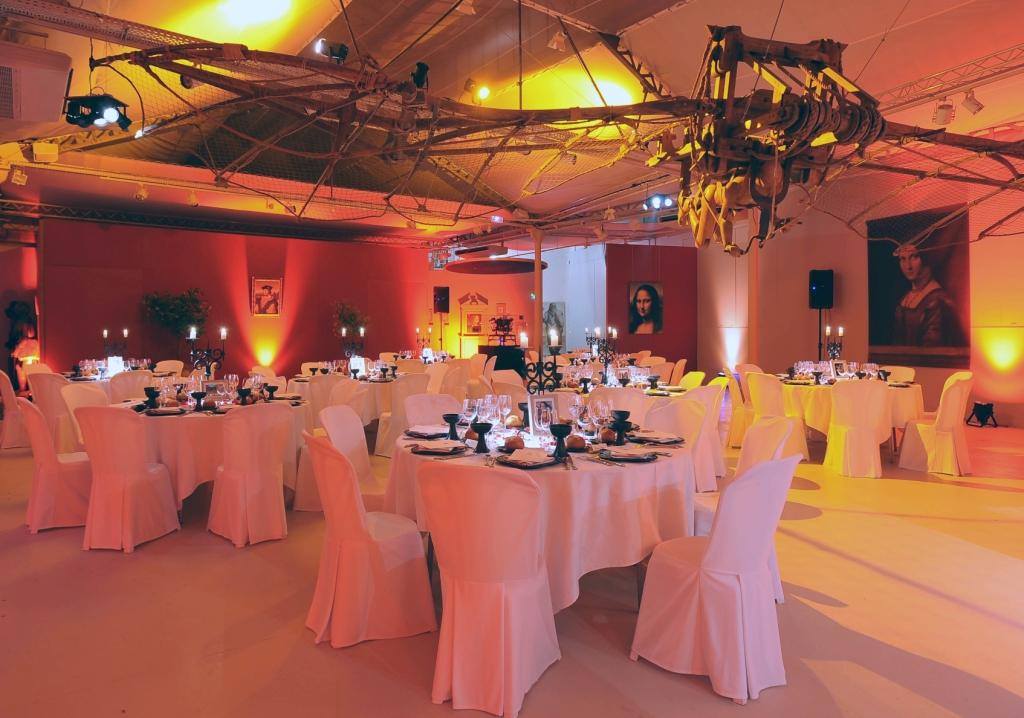
The exhibition was a great success and drew over 400,000 visitors and afterwards the flying machine found a new home at the Chateau du Clos Lucé at Amboise, the last home of Leonardo da Vinci the bird man and the place where he fell off his perch.
For the history and technical description of the machine, I attach a link to the 1989 catalogue entry.